
Welcome to Villa Amalia, a historic private residence where centuries of history meet the comfort and elegance of contemporary Italian living. Discover the story of the villa, from its historic roots in the hills of Cava de’ Tirreni to the welcoming retreat it is today.
Villa Amalia: Timeless History, Tradition, and Luxury
A Refuge from the Plague
In 1656, a devastating plague swept through Naples and much of the Kingdom of Naples, profoundly affecting the population and everyday life of the region. As the epidemic spread, those who could sought refuge away from the crowded city. The hills surrounding Cava offered a quieter setting, appreciated for their mild climate, natural beauty and distance from the densely populated urban centre. Over time, the area of Rotolo became home to elegant residences and country villas, shaping the distinctive character that can still be seen today. It is within this historic landscape that the story of Villa Amalia takes shape a place where centuries of local history, architecture and the tradition of country living have come together.

The Historic Setting of Rotolo-Casaburi
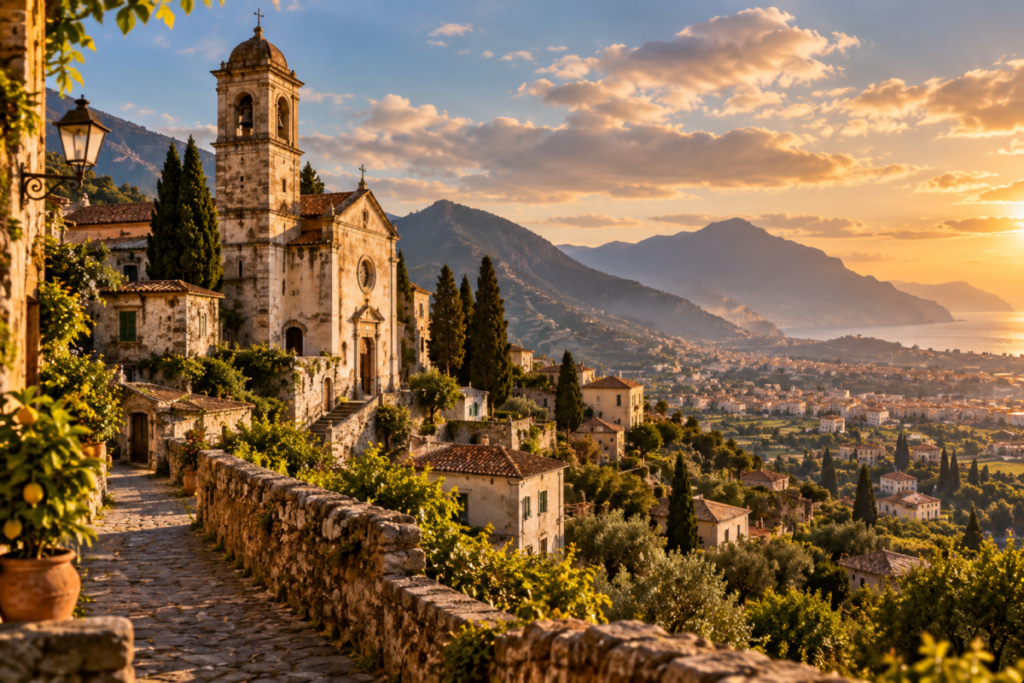
Villa Amalia stands in Rotolo-Casaburi, one of the historic hillside settlements of Cava de’ Tirreni, surrounded by a landscape that has preserved its rural character over the centuries.The history of the area reaches deep into the Middle Ages. The nearby Church of San Giovanni Battista is documented as early as 1168, when it was mentioned in a papal bull of Alexander III, and was later elevated to parish status in 1441 under King Alfonso I of Aragon.Over the centuries, the hills surrounding Cava became known for their natural beauty, mild climate and elegant country residences. This historic setting forms the backdrop to Villa Amalia and helps explain the distinctive character of the place today.
The Ancient Cistern: From Water Reservoir to Wine Cellar
Beneath Villa Amalia lies one of the property’s most fascinating historic features: an ancient cistern once used as part of the villa’s water supply system. Connected to the historic ground floor through underground passages, it recalls a time when large country residences relied on their own systems for collecting and storing water. Over the years, the cistern lost its original function but remained an integral part of the villa. Rather than being abandoned, this atmospheric underground space was preserved and transformed into a wine cellar, where its naturally cool environment provides an evocative setting for storing and enjoying wine. Today, the former cistern offers a tangible connection between Villa Amalia’s past and present an original historic space given a new purpose while preserving the character of the residence.

Villa Amalia Through Times of Change
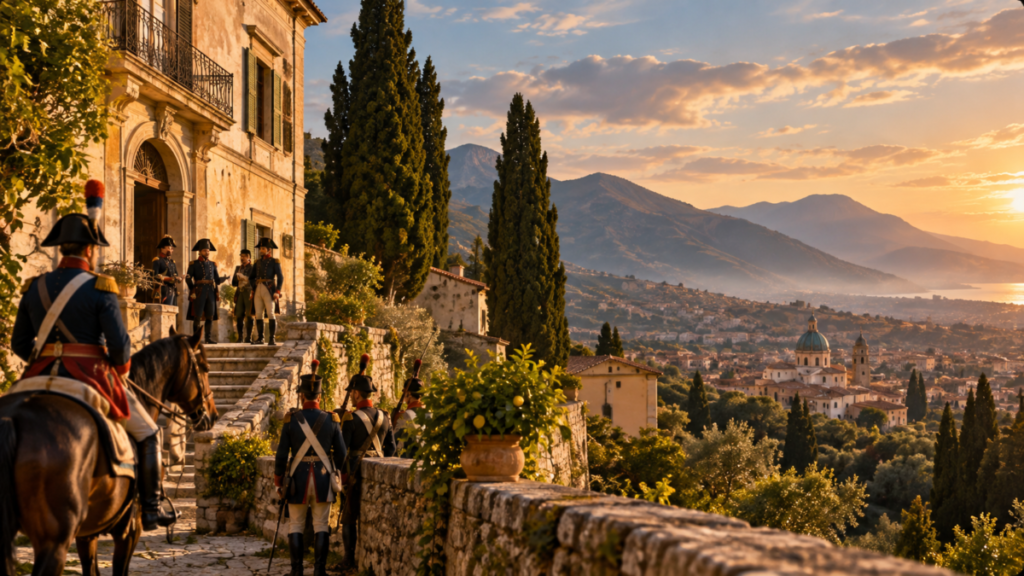
The history of Villa Amalia is intertwined with the profound political and social transformations that shaped Southern Italy between the late eighteenth and nineteenth centuries. According to accounts traditionally associated with the villa, the residence witnessed events connected with the turbulent period of the Neapolitan Republic of 1799 and, later, the revolutionary upheavals of 1848. These stories have been passed down as part of the historical memory of the property and the families who lived here. The wider historical context is well documented: in 1799, French forces operated throughout Campania during the conflict surrounding the short-lived Neapolitan Republic, while the revolutionary movements of 1848 brought another period of political instability to the Kingdom of the Two Sicilies. Although some details specifically concerning Villa Amalia remain part of local and family tradition rather than independently documented history, they reflect the long relationship between the residence and the changing world around it.

The Rebirth of Villa Amalia
After the First World War, the villa passed through different owners and, over the decades, gradually lost some of its original character and splendour.A new chapter began in 1982, when Professor Antonio Lambiase acquired the property from the Fiorentino family. Recognising the historic and architectural value of the residence, he embarked on an extensive restoration project that continued for approximately four years.Personally involved in the planning and supervision of the works, Professor Lambiase sought not simply to renovate the property, but to preserve its character while adapting it to contemporary life.When the restoration was completed, he dedicated the residence to his wife, Amalia. From that moment, the property became known as Villa Amalia.The restoration marked the beginning of the villa’s modern history. Today, Villa Amalia continues to evolve while preserving the atmosphere, architecture and sense of hospitality that have shaped the residence across generations.