
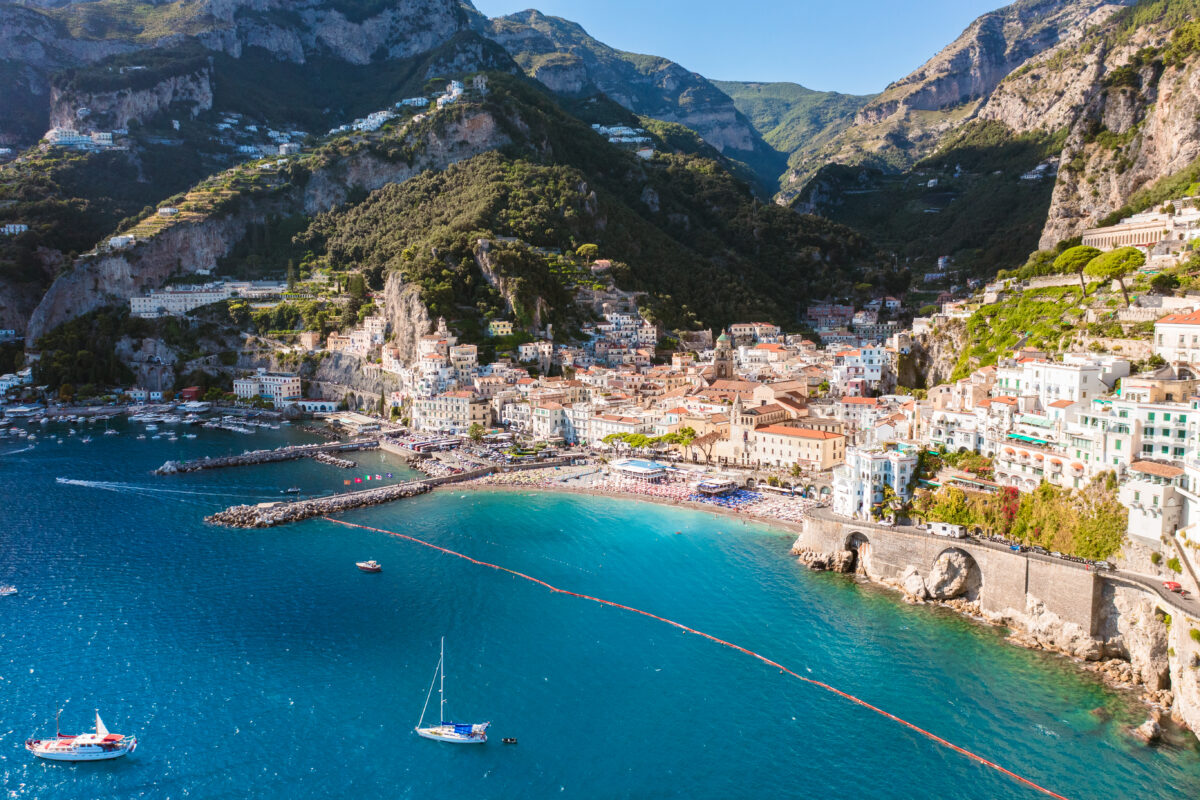
Sea, beaches, ancient traditions and the unmistakable flavour of anchovy colatura — just a short journey from Villa Amalia.
Cetara Amalfi Coast is one of those rare places where the Mediterranean lifestyle can still be experienced away from the glamour and crowds of the coast’s most famous destinations.
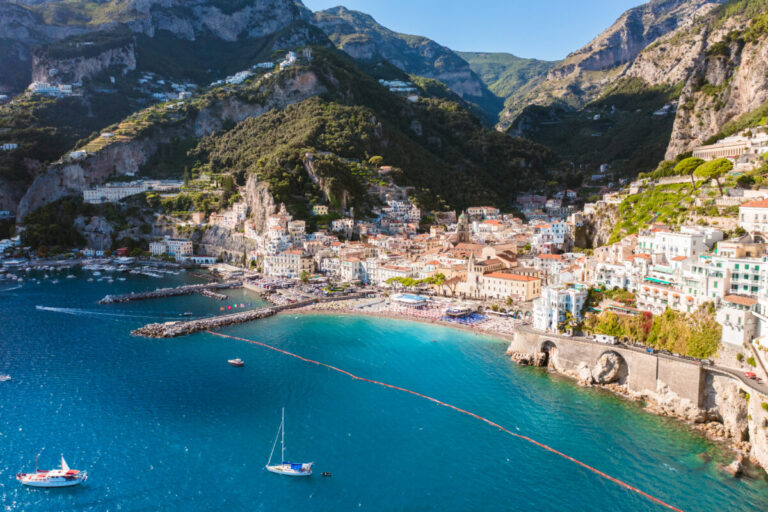
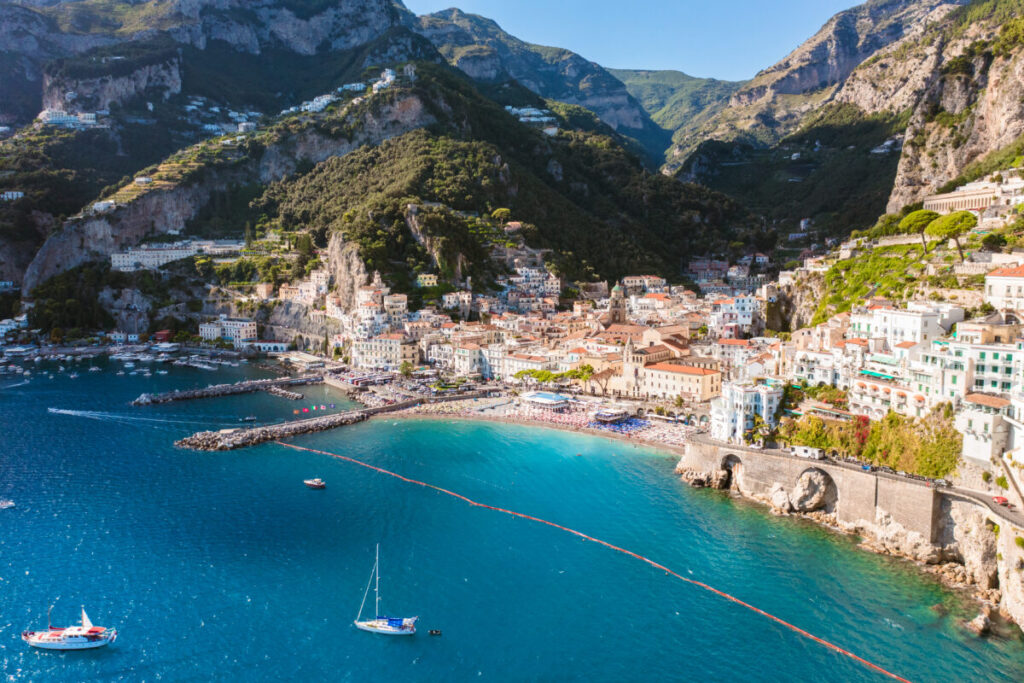
Nestled between the sea and the steep slopes of the Lattari Mountains, Cetara is a small fishing village where pastel-coloured houses descend towards the waterfront, fishing boats rest beside the beach and narrow streets lead visitors into a community whose identity remains deeply connected to the sea.
Unlike some of the larger resorts along the coast, Cetara has preserved much of the atmosphere of a traditional maritime village. Fishing is not simply part of its history: it continues to influence the local economy, gastronomy and everyday life. The official tourism portal describes Cetara as a destination whose traditional fishing activities have helped preserve the character of the old seaside village.
A village between the mountains and the Mediterranean
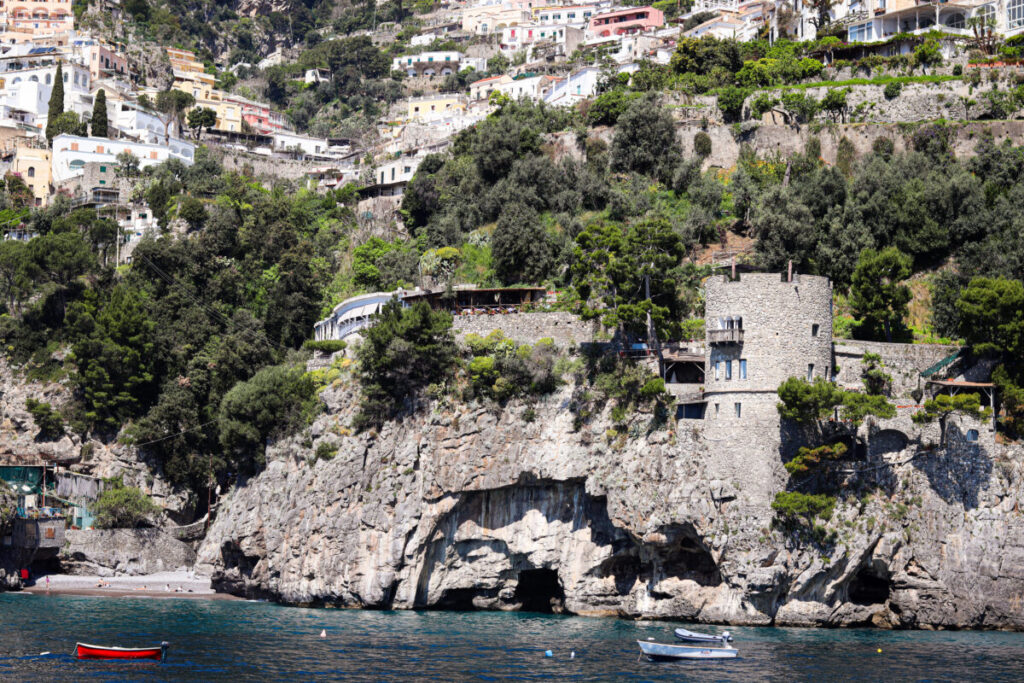
Cetara rises at the foot of Monte Falerio, on a narrow strip of land between the mountains and the sea.
Its geography explains much of its charm.
Looking towards the coast, visitors see the Mediterranean, the small harbour and fishing boats. Turning inland, the terrain rises almost immediately towards green hills and the characteristic terraced landscape of the Amalfi Coast.
The entire municipal territory forms part of the UNESCO World Heritage Site of the Amalfi Coast, recognised for the exceptional cultural landscape created over centuries by the relationship between its inhabitants and this extraordinarily steep Mediterranean environment.
Walking is probably the best way to discover Cetara. The village is compact enough to explore without an itinerary: small streets, stairways and passages suddenly open onto views of the sea, the beach or the surrounding mountains.
The Marina Beach
One of the pleasures of Cetara is that the sea is not separated from the village.
Marina Beach – Spiaggia della Marina – lies directly in the centre of Cetara, surrounded by the colourful houses of the waterfront and protected on one side by the imposing Viceregal Tower.
The beach combines sand and pebbles and faces south-east. Its favourable exposure also makes it an attractive place during mild days in spring and autumn, not only during the height of summer.
It creates one of Cetara’s most recognisable views: the Mediterranean in front, fishing boats along the shore and the houses climbing towards the mountains behind.
For travellers staying at Villa Amalia, this makes Cetara particularly suitable for combining several experiences in a single excursion:
a walk through the village, a few hours on the beach and a seafood lunch overlooking the Mediterranean.
Beaches and hidden corners along the coast
The Marina is not the only place to enjoy the sea.
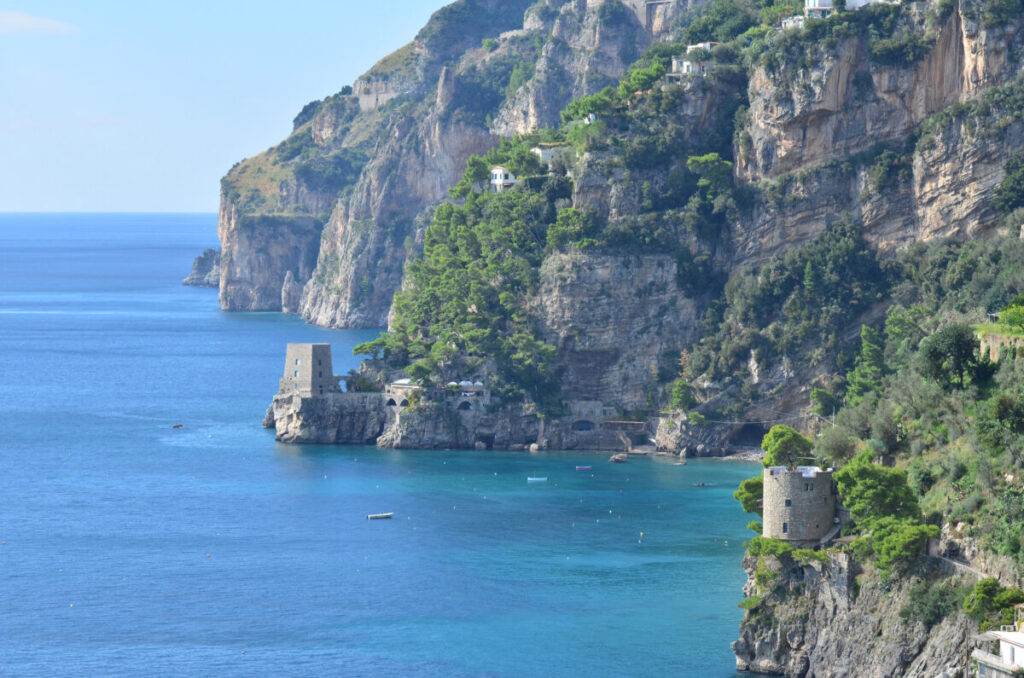
Around Cetara there are several beaches and small coastal inlets, some easily accessible from the village and others best reached from the water.
This is one of the pleasures of exploring this part of the Amalfi Coast by boat: beyond the main beaches, the rocky coastline reveals tiny coves that remain almost invisible from the road.
For visitors who want to spend more time by the sea, Cetara can therefore become more than a short sightseeing stop and easily fill an entire summer day.
The Viceregal Tower: the symbol of Cetara
Standing above the coastline, the Torre Vicereale – Viceregal Tower – is the architectural symbol of Cetara.
Its origins are connected with the defensive system created to protect coastal communities from attacks arriving from the sea. The tower’s distinctive profile still dominates the beach and waterfront and today houses the village’s civic museum. The official Cetara tourism portal identifies it as the town’s most important historical monument.
From a photographic point of view, the area surrounding the tower is also one of the most attractive parts of the village.
The contrast between the stone fortification, colourful houses, vegetation and blue Mediterranean creates one of those scenes that immediately identifies the Amalfi Coast.
A village shaped by fishing
To understand Cetara, however, it is necessary to understand its relationship with fishing.
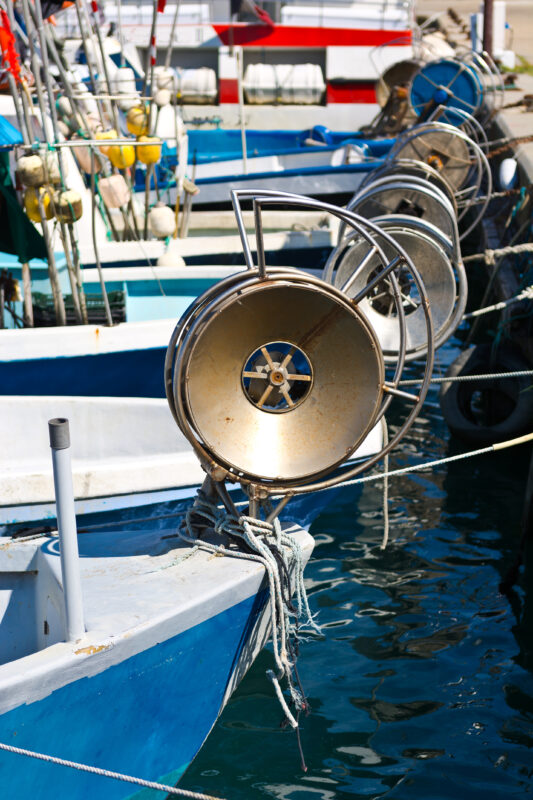
For generations the village has been associated particularly with anchovies and bluefin tuna. The local tourism authority describes Cetara as an important centre for bluefin tuna fishing and highlights fishing as one of the fundamental elements of the town’s identity.
The harbour therefore remains much more than a picturesque backdrop for photographs.
At different moments of the day, fishing boats and the traditional lampare become part of the scenery. Italia.it specifically describes the spectacle of the lampare departing from the harbour in the evening as one of Cetara’s characteristic experiences.
For visitors, the late afternoon and early evening can consequently be one of the most atmospheric times to discover the village.
Colatura di Alici di Cetara: a taste of the Mediterranean
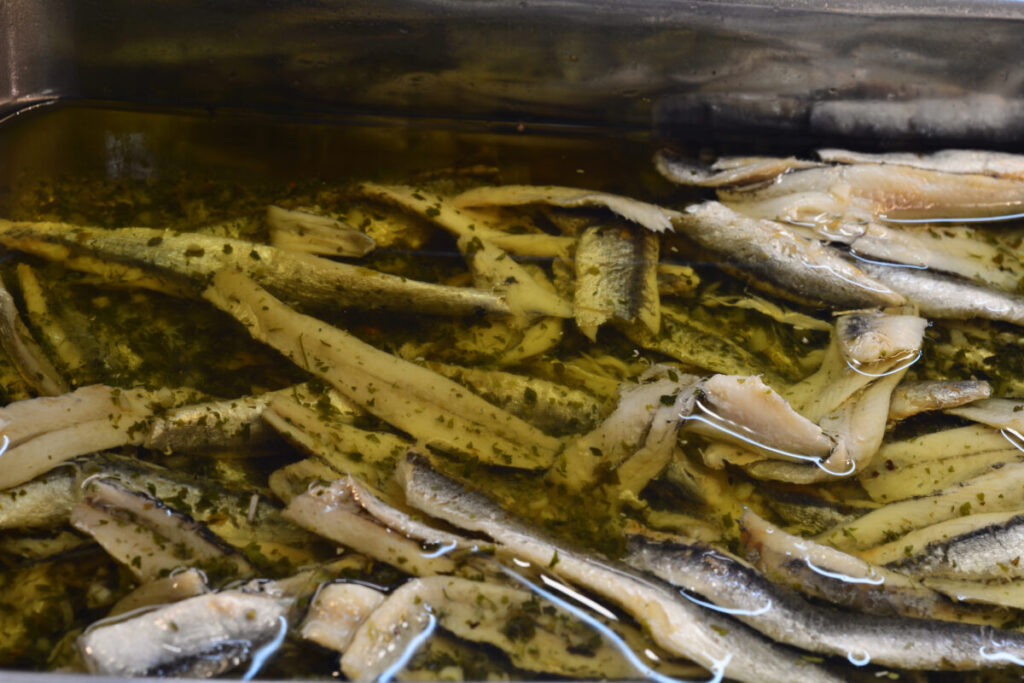
Cetara’s most famous gastronomic product is undoubtedly Colatura di Alici di Cetara DOP.
It is an intensely flavoured amber-coloured liquid obtained through the traditional maturation of salted anchovies. Today it represents one of the most distinctive ingredients of Campanian cuisine and has obtained European Protected Designation of Origin recognition.
The official tourism portal presents anchovy colatura as the principal condiment of Cetara’s cuisine and one of the products that most strongly identifies the village.
Its best-known use is deceptively simple: spaghetti with colatura di alici, generally prepared with very few ingredients so that the intense flavour of the anchovy extract remains the protagonist.
But Cetara’s cuisine extends well beyond colatura.
Fresh anchovies, tuna and other local fish appear throughout its gastronomic tradition, alongside another symbol of the Amalfi Coast: the Sfusato Amalfitano IGP lemon, still cultivated on the terraces surrounding the village.
For this reason, a visit to Cetara without stopping for lunch or dinner would mean missing an important part of the experience.
Cetara at sunset
Visitors who do not want to spend the entire day here should consider arriving during the afternoon.
As the temperature falls and the light becomes softer, the village acquires a different atmosphere. The waterfront becomes ideal for a walk, fishing boats move through the harbour and restaurants prepare for the evening.
A particularly enjoyable itinerary for guests staying at Villa Amalia could therefore be:
Villa Amalia → Cetara → walk through the historic centre → Viceregal Tower → waterfront and beach → aperitivo → seafood dinner → return to Villa Amalia.
It offers an alternative to the longer excursions towards Amalfi and Positano while retaining the essential ingredients of the Amalfi Coast experience.
How to reach Cetara from Villa Amalia
One of Cetara’s advantages for guests staying at Villa Amalia is its position.
The most direct road itinerary is:
Villa Amalia → Cava de’ Tirreni → Vietri sul Mare → SS163 Amalfitana → Cetara.
After reaching Vietri sul Mare, visitors enter the famous SS163 Amalfitana, following the coast eastwards towards Cetara.
Travel time varies considerably according to season and traffic conditions. For practical purposes, I would tell guests to allow approximately 20–30 minutes by car in normal traffic, while remembering that travelling times along the Amalfi Coast can increase substantially during weekends and the summer season.
For this reason, departure time is often more important than distance.
Reaching Cetara by sea
There is another option that can make the journey itself part of the experience.
During the operating season, Travelmar provides maritime connections serving Cetara and other destinations along the Amalfi Coast. Current services connect the area with destinations including Vietri sul Mare, Salerno, Maiori, Minori and Amalfi, although schedules are seasonal and departures can be modified or suspended according to sea and weather conditions.
For guests at Villa Amalia, an interesting itinerary can therefore be:
Villa Amalia → Vietri sul Mare → ferry to Cetara → visit and lunch → continue by ferry towards Maiori, Minori or Amalfi.
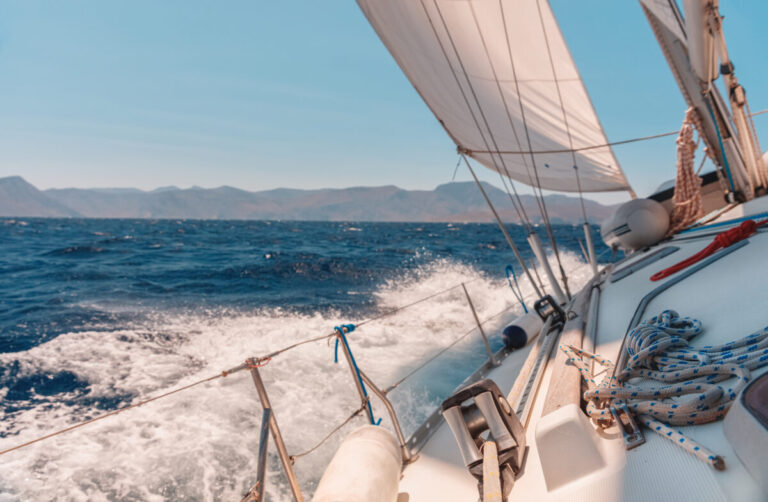
Travelling by sea also offers something that no road journey can provide: the opportunity to admire the vertical landscape of the Amalfi Coast from the Mediterranean.
https://www.travelmar.it/en/index
Official Cetara tourism information
How long should you spend in Cetara?
Cetara does not necessarily require a full day.
Around three to five hours are enough to discover the centre at a relaxed pace, walk along the waterfront, see the tower and enjoy lunch.
Those interested in swimming and beaches should allow considerably more time.
From Villa Amalia we would therefore suggest three different ways to experience Cetara:
2–3 hours — historic centre, harbour, Marina and Viceregal Tower.
Half day — village, beach and seafood lunch.
Full day — Cetara, beach and a ferry excursion to another village of the Amalfi Coast.
Why visit Cetara while staying at Villa Amalia?
Cetara offers something increasingly precious on the Amalfi Coast: authenticity without isolation.
It is close enough to Villa Amalia for a spontaneous excursion, yet different enough to offer a genuine change of atmosphere.
Here, visitors can experience the Mediterranean in several different ways within just a few hundred metres: swimming from a village beach, watching fishing boats in the harbour, wandering through narrow streets, discovering centuries of coastal history and finally tasting a dish whose ingredients come directly from the sea.
Cetara reminds travellers that the Amalfi Coast existed long before it became an international destination.
Behind the famous landscapes lies a culture created by fishermen, sailors, farmers and generations of families who learned to live between steep mountains and the Mediterranean Sea.
And in Cetara, that culture is still very much alive.